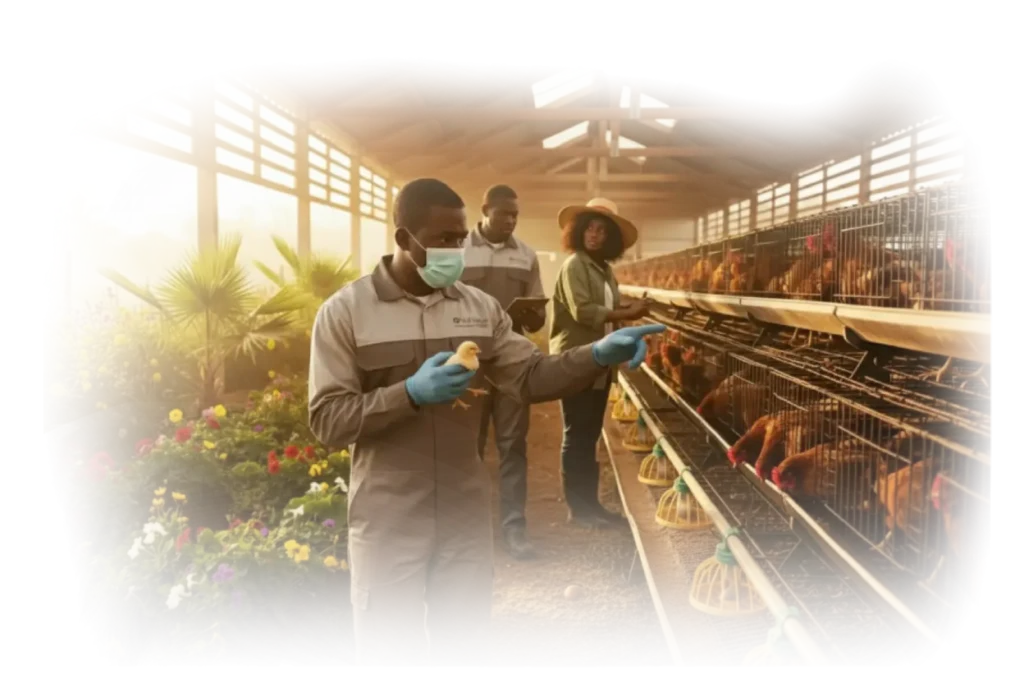
Brooding Mastery
Stop Wasting Money on Day-Old Chicks
You know the drill. You invest heavily in DOCs, you worry about the temperature, you hear that one chick coughing, and then the losses start. You bought potential, but you ended up with weak, stunted layers that hit point of lay late—or just stop laying early.
Fact
The truth? Most poultry loss happens before Week 18.
We built this service because we’re tired of seeing farmers toast their investment by guessing during the most critical phase. We manage the entire 18-week process using the same strict protocols we use on our own farm.
The Problem
The High-Risk Zone (Weeks 1-18)
Before a bird ever reaches peak production, it passes through a silent danger zone. Most losses, poor growth, and weak layers are not accidents—they are the result of stress, missed timing, and unmanaged transitions in the first 18 weeks. This is where farms either build strong producers or lose birds without knowing why.
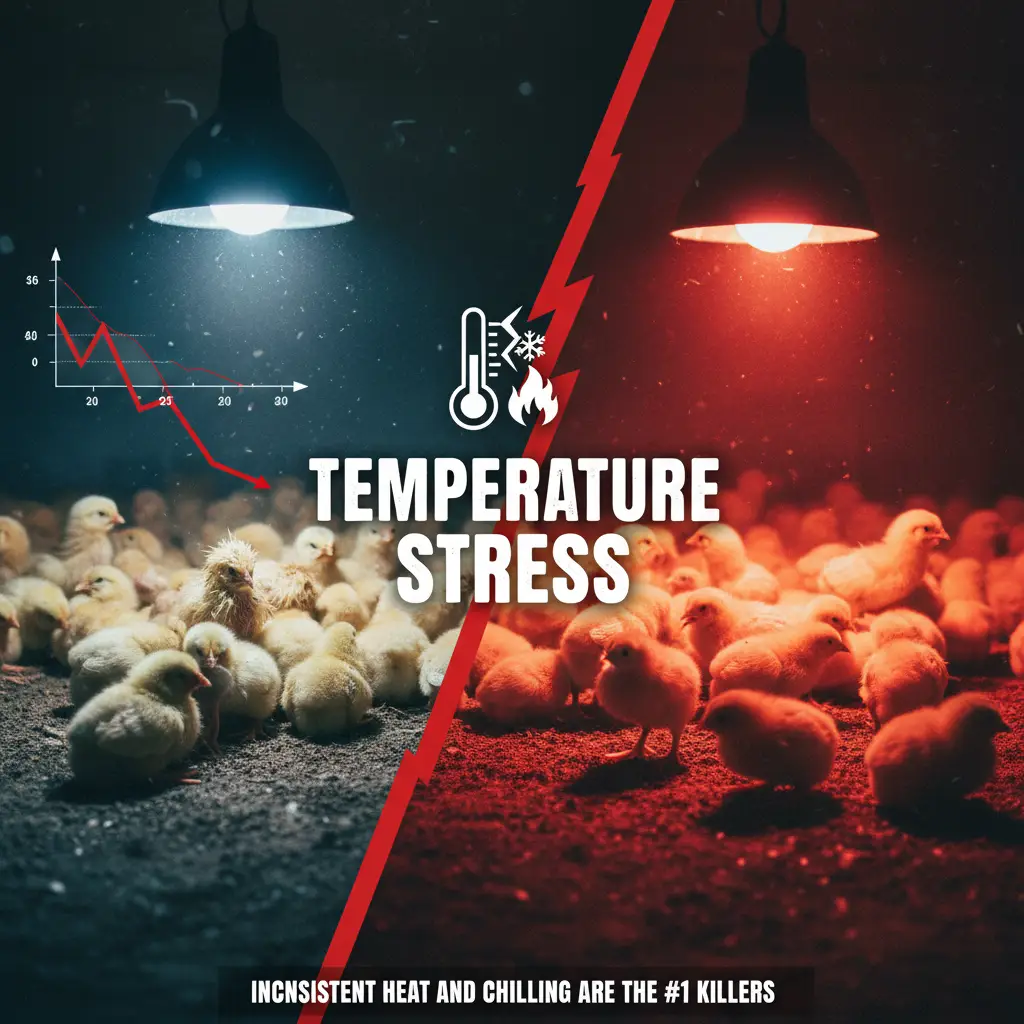
Inconsistent heat and chilling are the #1 killers of young chicks. They get sick, they huddle, and they fail to thrive.
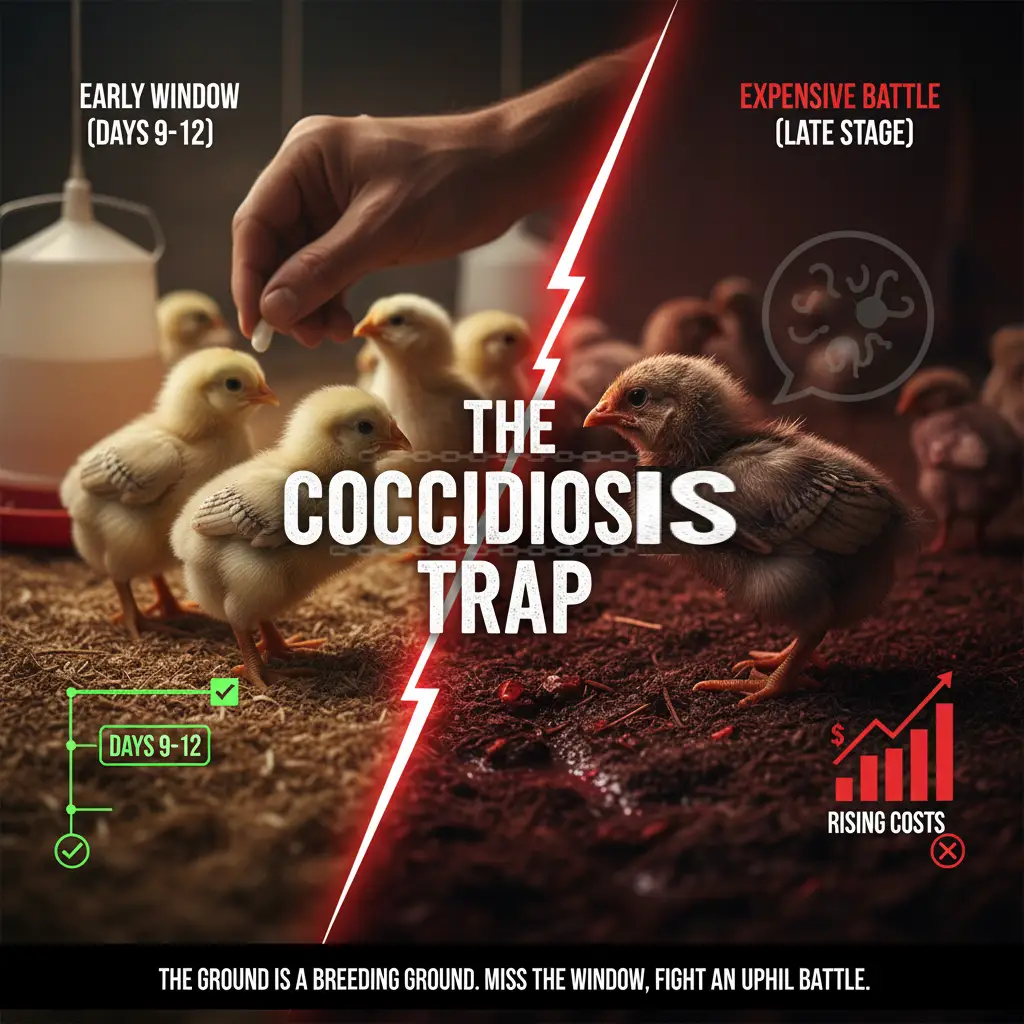
The ground (deep litter) is a breeding ground for coccidiosis. If you miss the early medication window (Days 9-12), you’re fighting an uphill, expensive battle.
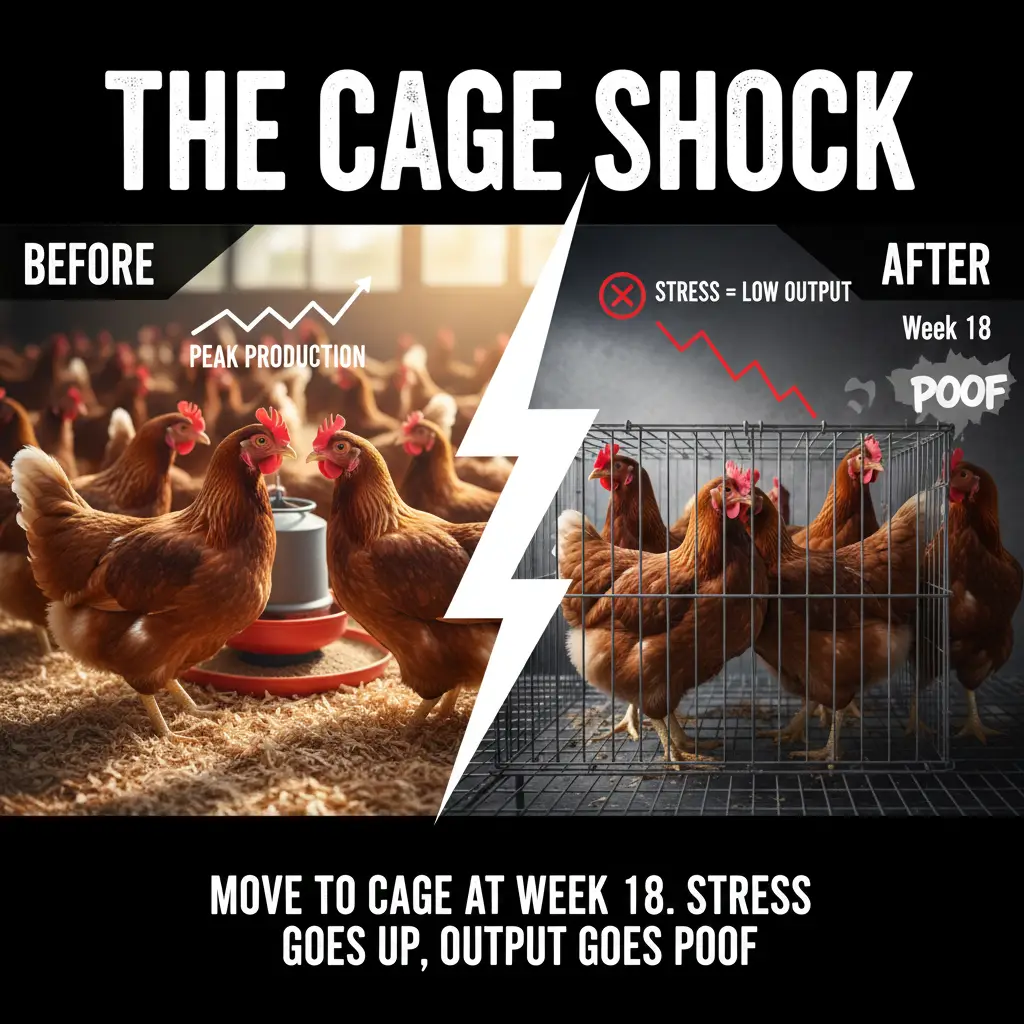
You move a bird straight from a wide-open floor into a cramped cage the minute it starts laying (Week 18). The stress level goes through the roof, and the bird just goes poof—it misses peak production. Stress equals low output.
Our Solution
The Essential Farm 18-Week Development Program
Our service doesn’t just keep them alive; it builds robust, resilient pullets ready to deliver 280+ eggs a year, validating the first of our non-negotiable pillars: Source of the Birds (Genetics).
Phase 1
Deep Litter & Foundation Building (Weeks 1-13)
This phase is about skeletal development and immunity.
| Activity | Timing | Why It’s Non-Negotiable |
|---|---|---|
| Chick Receiving Protocol | Day 1 | Immediate glucose and anti-stress supplements to counter transport shock. We don’t wait. |
| Strict Heat & Ventilation | Weeks 1–4 | Maintaining 35°C initially, steadily decreasing. Proper ventilation prevents ammonia build-up and respiratory issues. |
| Anti-Coccidial Treatment | Days 9–12 | Targeted early intervention to eliminate coccidiosis before it becomes systemic. We don’t use it constantly — we use it right. |
| Initial Vaccinations | Scheduled | Executed with a 24-hour multivitamin/electrolyte protocol (before and after) to reduce stress and maximize vaccine efficacy. |
Phase 2
Cage Acclimation & Management Prep (Weeks 13-18)
This is where we separate ourselves from 90% of other brooding operations. We eliminate the single greatest source of laying stress.
The Critical Week 13 Transfer (No Exceptions) We move the birds from the floor-based deep litter system into the Battery Cages around Week 13. Why Week 13?
Eliminates Stress
The bird has 5-7 weeks to get accustomed to the cage environment—the wire floor, the specific water nipples, the feed trough—before the physiological stress of starting to lay at Week 18 hits.
Prevents Laying Shock
2.If you wait until Week 18, the bird is trying to adjust to a new environment while its body is screaming with the effort of producing the first egg. You lose production, period.
Debeaking
We schedule the controlled debeaking around Week 8-10 (during this phase) to prevent cannibalism and reduce feed wastage—a direct application of our Farm Management pillar.
Why Outsource Your Brooding to Essential Farm?
This isn't theoretical advice; it's the exact, proprietary process we use to raise our own layers in Onitsha. It's a proven system tied to our 4-Pillar framework.
You receive a pullet, not a project. Our birds are already adapted to cage life, hitting target weights, and are fully pre-vaccinated, ready to drop eggs for maximum return.
You shift the entire financial and labor risk of the first 18 weeks (when mortality is highest) to us. You just pay for a healthy, ready-to-lay bird.
Why Choose Us
Frequently Asked Questions
Why is brooding the most critical stage in poultry production?
Brooding determines the lifetime performance of the bird. Errors made in the first 18 weeks cannot be corrected later, no matter how good management becomes. Bone strength, immune development, digestive capacity, and stress tolerance are all established during this period.
Most poultry losses and underperformance originate here, not during lay. Poor brooding leads to weak birds that never reach genetic potential, regardless of feed or housing quality later.
How long does Essential Farm’s brooding program run?
Our brooding service runs from Day-Old Chick (DOC) to 18 weeks of age. This covers the entire developmental phase before egg production begins. We do not release birds early, because partial brooding transfers risk back to the farmer.
By Week 18, birds are fully vaccinated, uniform, cage-adapted, and physiologically prepared to lay.
What happens during Phase 1 (Weeks 1–13)?
Phase 1 focuses on foundation building. Chicks are raised on deep litter with strict temperature control starting around 35°C. On arrival, chicks receive glucose and electrolytes to restore energy after transport stress.
Vaccinations are administered according to schedule, with vitamin and electrolyte support before and after to ensure immune response. Between Days 9–12, anti-coccidial treatment is given to eliminate early gut parasites before they cause damage.
The objective of Phase 1 is strong bones, healthy gut development, and uniform growth.
Why is temperature control so critical during early brooding?
Chicks cannot regulate their body temperature. Even small fluctuations cause chilling, piling, dehydration, and death. Inconsistent heat also weakens immunity, making birds vulnerable to disease.
We maintain stable temperatures and observe chick behavior continuously to adjust heat, ventilation, and spacing. Heat management is treated as a life-support system, not a background task.
What is Phase 2 (Weeks 13–18), and why is it necessary?
Phase 2 is cage acclimation. Birds are transferred to cages at Week 13, not at point-of-lay. This gives them 5–7 weeks to adapt to wire floors, feeders, drinkers, and restricted movement before egg production begins.
This prevents laying shock—a condition where birds are forced to adapt to a new environment while simultaneously starting to lay eggs.
Why is moving birds at 18 weeks a mistake?
When birds are moved at 18 weeks, they face environmental stress at the exact moment their reproductive system activates. This results in delayed laying, reduced peak production, weak shells, and uneven performance.
Early cage acclimation eliminates this problem entirely.
Is debeaking part of the brooding service?
Yes. Controlled debeaking is done around Weeks 8–10 to reduce feed wastage and prevent cannibalism. Birds receive anti-stress vitamins before and after the procedure to ensure rapid recovery and minimal impact on growth.
What does the farmer receive at the end of the brooding service?
Farmers receive ready-to-lay pullets that are:
Fully vaccinated
Uniform in weight
Cage-adapted
Stress-conditioned
Prepared for immediate production
This allows the farmer to focus on egg production rather than damage control.
Who is this brooding service designed for?
This service is ideal for:
Farmers who want predictable performance
Investors entering poultry without technical risk
Farms tired of early losses and uneven flocks
Operations scaling production professionally
What is the biggest advantage of outsourcing brooding to Essential Farm?
Risk removal. The most dangerous phase of poultry production is handled by specialists using proven systems. Farmers receive birds that are biologically and operationally ready to perform.

Ready to Invest in a Flock You Can Count On?
Stop crossing your fingers and hoping the birds make it. Start your next cycle with resilient pullets backed by the Essential Farm system.