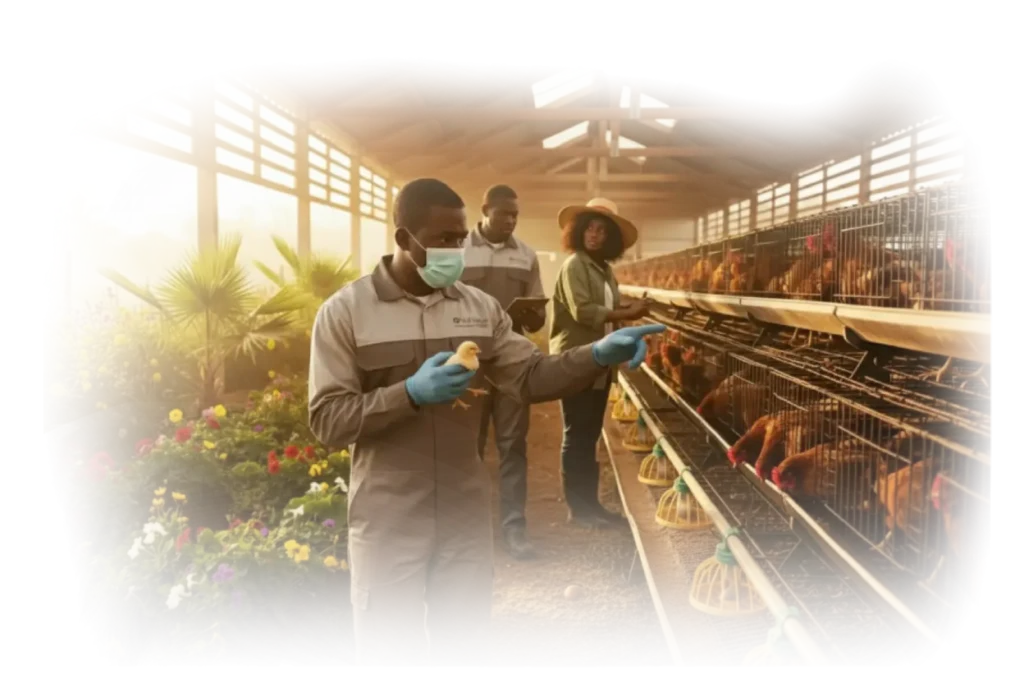
Flock Management & Economic Culling
Protect Your Feed Bill and Your Future Flocks.
You’ve invested thousands in your birds and months of labor. Why risk losing profit margin to preventable issues like feed wastage, cannibalism, or, worst of all, passing disease to your next batch?
Note
This service focuses on the financial backend of farming.
This service focuses on the financial backend of farming. We treat Debeaking and Culling not as chores, but as critical economic decisions that enforce our Type of Feed Given and Biosecurity pillars. Stop wasting money and start cycling your profits cleanly
The Problem
Letting the Flock Run Itself
When management goes passive, the birds don’t become “natural”—they become expensive problems. Without firm control, small inefficiencies turn into daily losses, bad behaviors spread fast, and the flock starts deciding your profit margins for you.
A fully-beaked bird is a feed spiller. They rake expensive mash out of the trough and onto the floor. You’re literally paying for feed to be wasted.
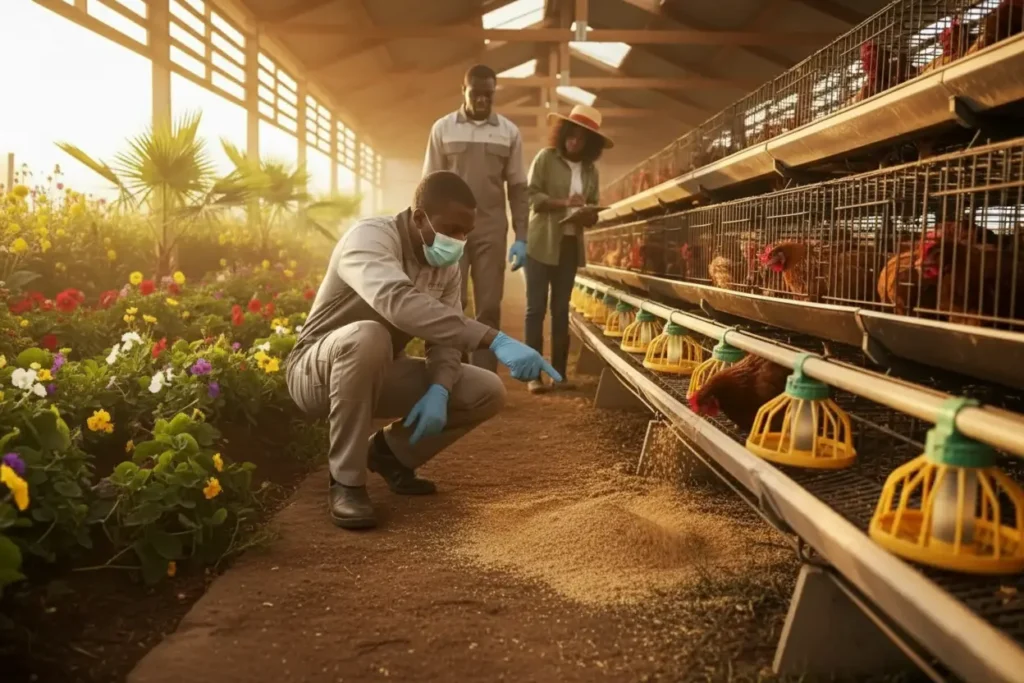
Yes, I know that sounds dramatic—whatever, but layers can be savages. Once they start pecking feathers or vent-pecking, it spreads like wildfire and you lose birds that were perfectly fine two hours ago.
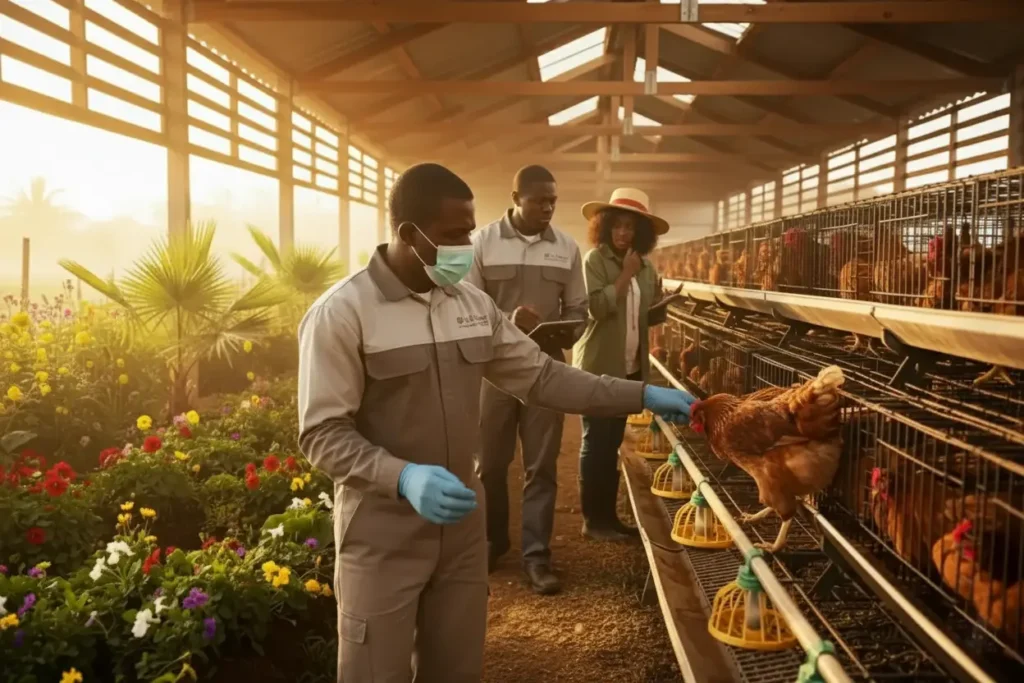
Holding onto old, unprofitable layers too long makes your house a disease reservoir. When you bring in new DOCs, those lingering vectors will crash your new investment. It’s a dumb idea.
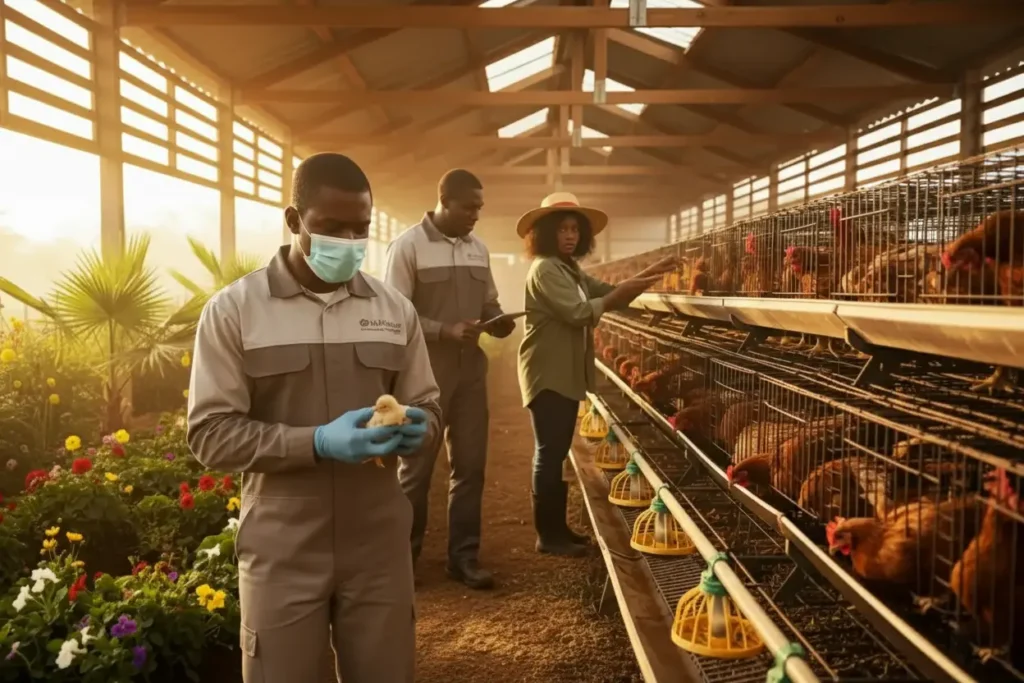
Our Solution
Essential Farm Efficiency & Clean Cycle Protocol
We execute these processes with precision and strict adherence to hygiene, ensuring your feed is efficiently converted and your facility is safe for the next investment.
Controlled Debeaking (Maximizing Feed Efficiency)
This service is a direct intervention to protect your biggest expense—the feed bill—while preventing flock self-destruction.
| Process Element | Timing | Economic Benefit (The Authority) |
|---|---|---|
| Precision Debeaking | Typically around Weeks 8–10 | Controlled trimming of the beak tip prevents birds from aggressively raking feed out of the trough, instantly reducing feed wastage. |
| Cannibalism Prevention | Critical Intervention | Drastically reduces aggressive behaviors such as feather- and vent-pecking that can wipe out otherwise healthy birds in a single day. |
| Stress Management | Pre/Post Support | Anti-stress vitamins and electrolytes are administered before and after the procedure to ensure rapid recovery and minimal disruption to growth. |
Selling of Old Layers (The All-In, All-Out System)
The decision to cull (retire and sell) a flock is purely economic. When the lay rate drops below the profitability threshold, the bird is no longer an asset; it’s a liability consuming your expensive Type of Feed Given
Type of Feed Given
Economic Assessment
We help you determine the exact point where the cost of feed outweighs the value of the eggs produced. We don’t hold on to sentiments; we hold on to profit.
The Clean Break
We enforce the All-In, All-Out System. This is the most crucial part of Biosecurity. When the flock is sold, the house is completely emptied for deep cleaning, disinfection, and a rest period.
Prevents Disease Transmission
This clean break guarantees that the new batch of DOCs we bring in will not inherit diseases or parasites from the previous generation, securing your future investment.
Why Choose Essential Farm for Management?
Our management services are focused on risk and efficiency. We don't just perform a service; we perform an economic audit that saves you money on feed and prevents catastrophic disease loss.
Our commitment to the All-In, All-Out System is the best guarantee you have against chronic health issues that plague continuous-cycle farms.
use the exact same standards for your flock management that we use to keep our own 2500-bird farm running smoothly—it's a proven system.
Why Choose Us
Frequently Asked Questions
What does flock management actually mean in a commercial poultry system?
Flock management is the continuous control of bird behavior, feed efficiency, health status, and economic performance throughout the production cycle. It is not about reacting to problems, but about preventing inefficiencies before they become visible losses.
Proper flock management ensures that every bird contributes positively to production, feed is converted efficiently into eggs, disease pressure remains low, and operational decisions are based on data rather than habits or emotions.
Why is feed efficiency central to flock management?
Feed represents the largest single cost in poultry production. Any inefficiency—spillage, poor digestion, parasite load, or behavioral waste—directly reduces profit.
Birds with intact, elongated beaks often rake feed out of troughs, wasting expensive ration onto the floor. Over time, this invisible loss accumulates into major financial leakage. Managing feed efficiency is therefore not optional; it is fundamental to survival in commercial farming.
What role does controlled debeaking play in flock efficiency?
Controlled debeaking reduces feed wastage and aggressive behaviors such as feather pecking and cannibalism. By limiting the bird’s ability to rake feed excessively, consumption becomes more precise and conversion improves.
Debeaking is performed at a specific age (typically Weeks 8–10) when birds recover fastest. Anti-stress vitamins are administered before and after the procedure to protect growth and immune function. When done correctly, debeaking does not harm productivity—it protects it.
How does cannibalism affect flock performance?
Cannibalism causes sudden, unpredictable losses. It often starts subtly—feather pecking, vent pecking—and escalates rapidly, especially in high-density housing.
Once cannibalism begins, it spreads behaviorally. Without intervention, it can wipe out a significant portion of the flock. Controlled debeaking, proper lighting, nutrition balance, and space management are essential preventive measures.
What is economic culling within flock management?
Economic culling is the systematic removal of birds that no longer contribute positively to profitability. Unlike general culling, which may remove sick or injured birds, economic culling targets underperforming birds and flocks based on measurable output.
When egg production, shell quality, or feed conversion drops below viable thresholds, holding those birds becomes a guaranteed loss. Economic culling restores efficiency and protects future production cycles.
How do parasites quietly destroy flock profitability?
Internal parasites consume nutrients meant for egg production. Birds may continue eating normal feed quantities, but nutrients are diverted away from eggs, leading to thin birds, poor shells, and reduced lay rates.
Because parasite damage is gradual, farmers often underestimate its impact. Scheduled deworming is the only effective control method.
What is your deworming strategy within flock management?
We deworm preventively, not reactively. During grow-out, birds are dewormed at Weeks 9 and 14. During lay, deworming continues every 6–8 weeks depending on environmental pressure.
Skipping deworming allows parasites to establish permanent cycles in the house, increasing feed cost and reducing output long before visible symptoms appear.
Why is holding weak or non-productive birds dangerous?
Weak birds become disease carriers. They shed pathogens while failing to produce economically, increasing risk to stronger birds and the entire house.
By removing these birds early, we reduce disease pressure, stabilize production, and protect the integrity of the flock.
How does flock management protect future production cycles?
By enforcing strict economic discipline and All-In, All-Out principles, flock management prevents disease carryover, feed inefficiency, and behavioral issues from being inherited by the next flock.
Each cycle begins clean, controlled, and optimized.
Who is this service best suited for? This service is essential for?
Medium to large layer farms
Farms with rising feed costs
Operations experiencing unexplained production drops
Farms transitioning to professional-scale management

Ready to Streamline Your Operation and Cut Waste?
Stop feeding waste and start running a clean cycle. Let us handle the tough operational decisions that safeguard your profit.