
Brooding Mastery
Stop Wasting Money on Day-Old Chicks
You know the drill. You invest heavily in DOCs, you worry about the temperature, you hear that one chick coughing, and then the losses start. You bought potential, but you ended up with weak, stunted layers that hit point of lay late—or just stop laying early.
Fact
The truth? Most poultry loss happens before Week 18.
We built this service because we’re tired of seeing farmers toast their investment by guessing during the most critical phase. We manage the entire 18-week process using the same strict protocols we use on our own farm.
The Problem
The High-Risk Zone (Weeks 1-18)
Before a bird ever reaches peak production, it passes through a silent danger zone. Most losses, poor growth, and weak layers are not accidents—they are the result of stress, missed timing, and unmanaged transitions in the first 18 weeks. This is where farms either build strong producers or lose birds without knowing why.
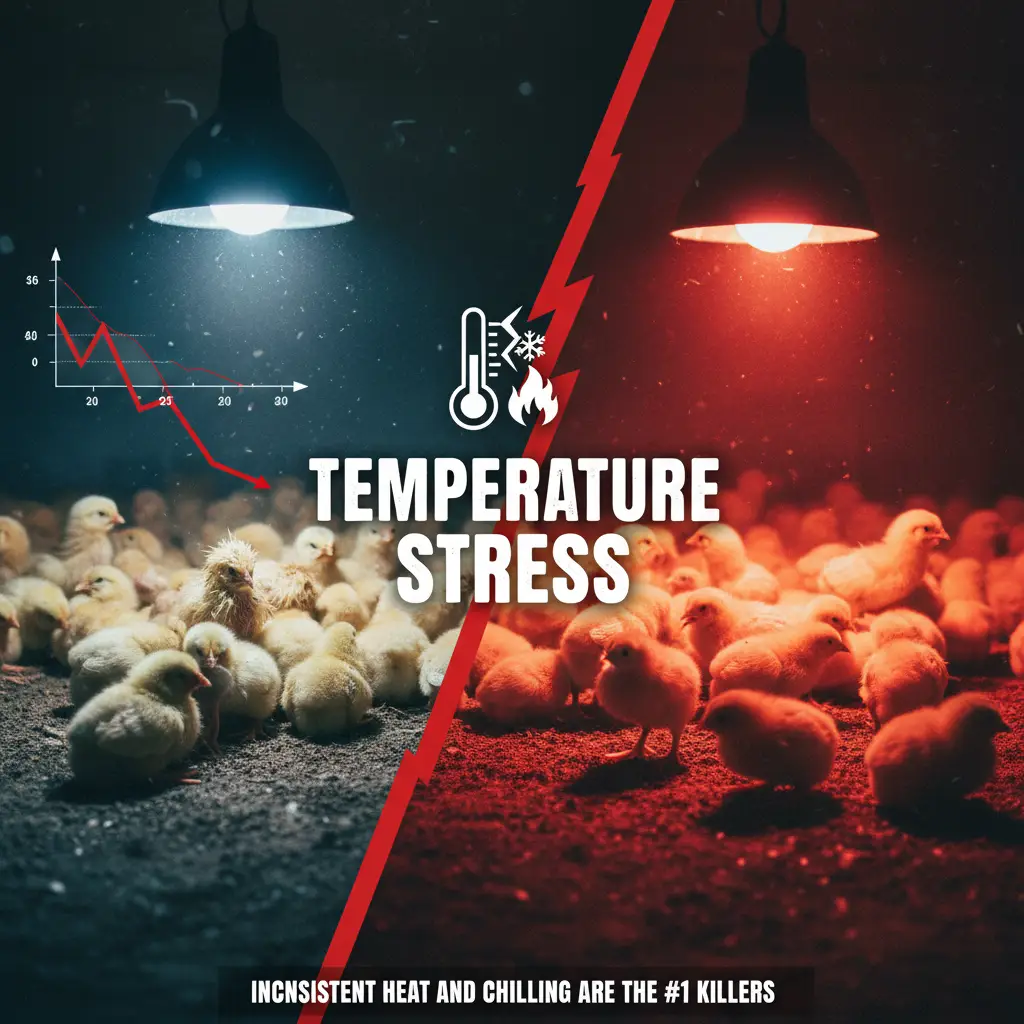
Inconsistent heat and chilling are the #1 killers of young chicks. They get sick, they huddle, and they fail to thrive.
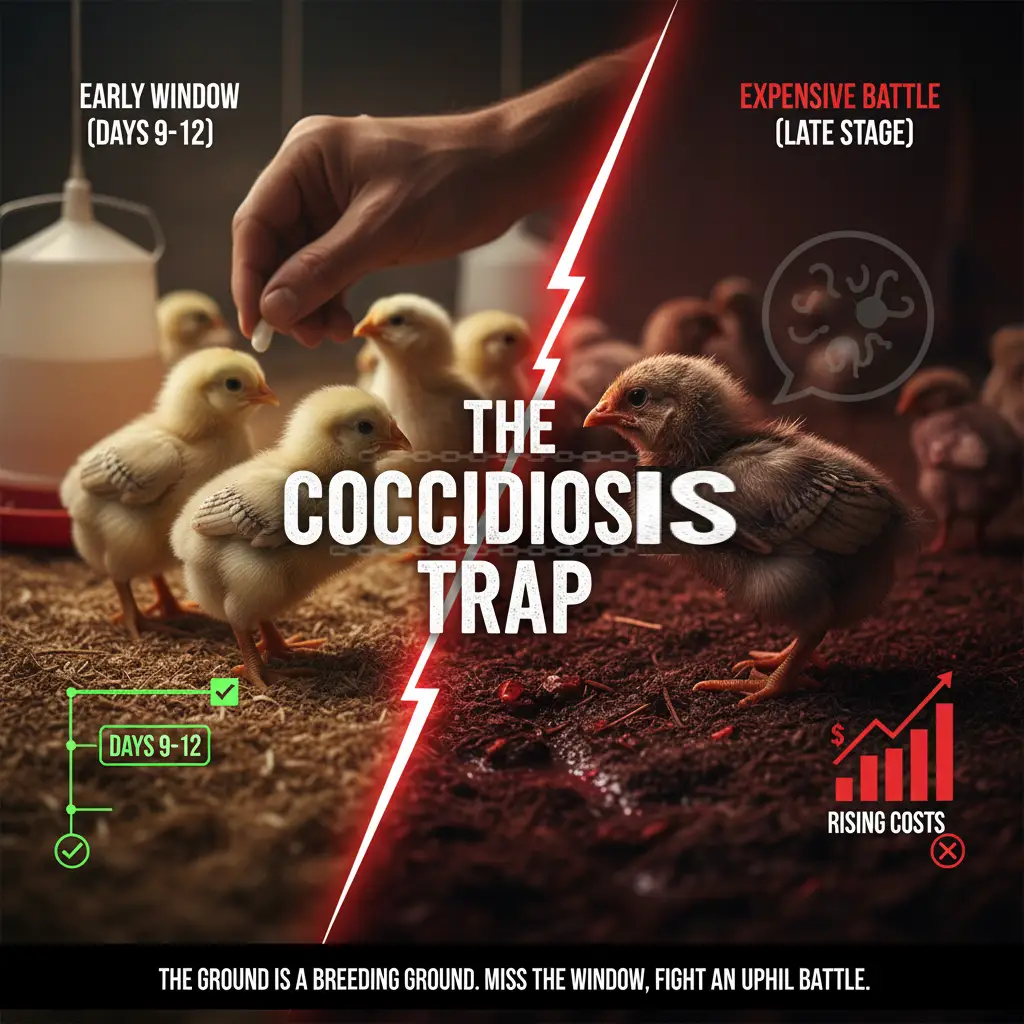
The ground (deep litter) is a breeding ground for coccidiosis. If you miss the early medication window (Days 9-12), you’re fighting an uphill, expensive battle.
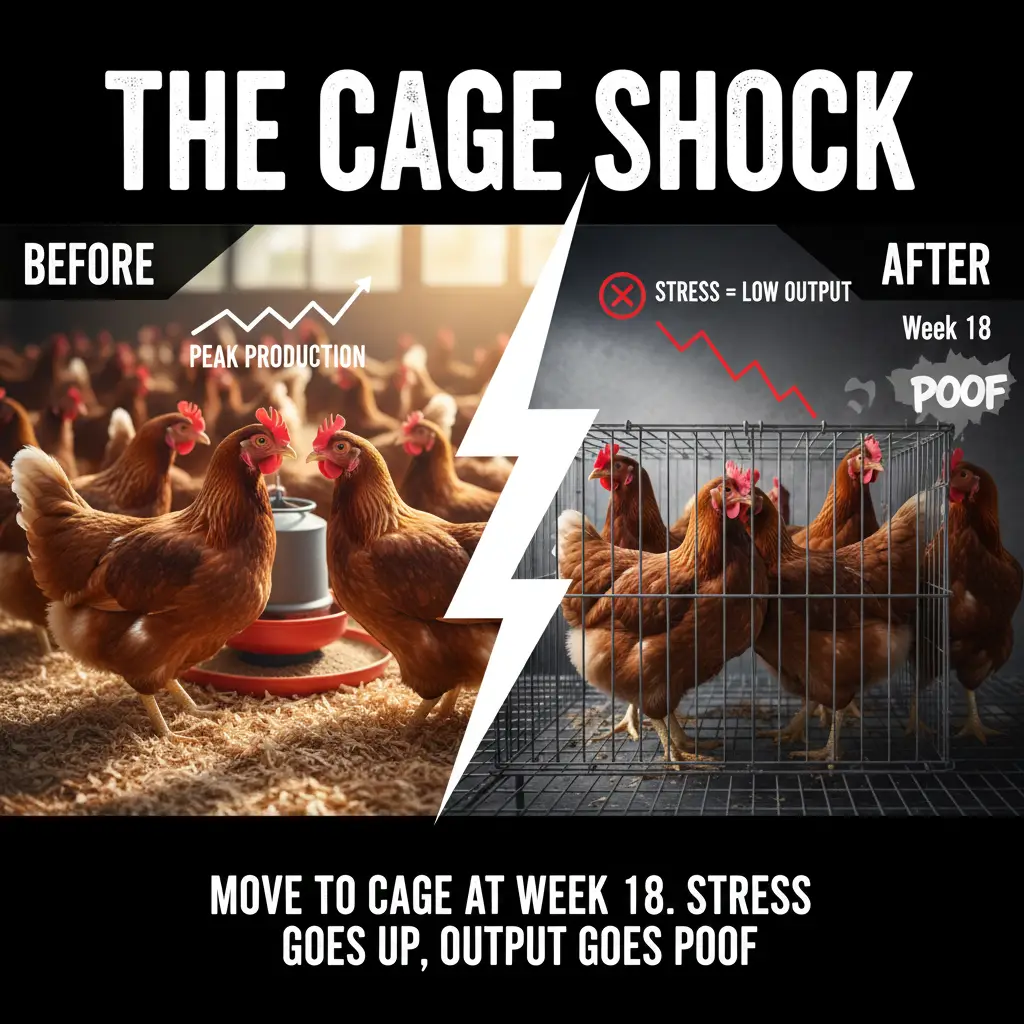
You move a bird straight from a wide-open floor into a cramped cage the minute it starts laying (Week 18). The stress level goes through the roof, and the bird just goes poof—it misses peak production. Stress equals low output.
Our Solution
The Essential Farm 18-Week Development Program
Our service doesn’t just keep them alive; it builds robust, resilient pullets ready to deliver 280+ eggs a year, validating the first of our non-negotiable pillars: Source of the Birds (Genetics).
Phase 2
Cage Acclimation & Management Prep (Weeks 13-18)
This is where we separate ourselves from 90% of other brooding operations. We eliminate the single greatest source of laying stress.
The Critical Week 13 Transfer (No Exceptions) We move the birds from the floor-based deep litter system into the Battery Cages around Week 13. Why Week 13?
Eliminates Stress
The bird has 5-7 weeks to get accustomed to the cage environment—the wire floor, the specific water nipples, the feed trough—before the physiological stress of starting to lay at Week 18 hits.
Prevents Laying Shock
2.If you wait until Week 18, the bird is trying to adjust to a new environment while its body is screaming with the effort of producing the first egg. You lose production, period.
Debeaking
We schedule the controlled debeaking around Week 8-10 (during this phase) to prevent cannibalism and reduce feed wastage—a direct application of our Farm Management pillar.
Why Outsource Your Brooding to Essential Farm?
This isn't theoretical advice; it's the exact, proprietary process we use to raise our own layers in Onitsha. It's a proven system tied to our 4-Pillar framework.
You receive a pullet, not a project. Our birds are already adapted to cage life, hitting target weights, and are fully pre-vaccinated, ready to drop eggs for maximum return.
You shift the entire financial and labor risk of the first 18 weeks (when mortality is highest) to us. You just pay for a healthy, ready-to-lay bird.
Why Choose Us
Frequently Asked Questions
How often do you recommend scheduling garden maintenance?
For most gardens, we recommend maintenance every one to two weeks during the growing season to keep plants healthy, lawns neat, and weeds under control. In cooler months, monthly visits are usually enough to maintain your garden’s appearance and prepare it for the next season. We can also create a custom schedule based on your garden’s unique needs and your preferred level of upkeep.
Can you work with existing garden features?
Absolutely! We specialise in working with existing garden features to enhance and revitalise your outdoor space. Our expert gardeners can incorporate your favourite elements while suggesting improvements to create a cohesive and beautiful garden that builds on your space’s existing character.
How do you determine the cost of garden landscaping?
The cost of garden landscaping depends on several factors, including the size of your outdoor space, the complexity of the design, the types of plants and materials chosen, and any additional features like irrigation systems or lighting. We start with an on-site consultation to understand your vision and assess the area, then provide a detailed quote outlining all costs before any work begins. This way, you’ll know exactly what to expect with no surprises.
What types of plants do you typically recommend?
We recommend plants based on your garden’s sunlight, soil type, climate, and the level of maintenance you prefer. For a low-maintenance garden, we often suggest hardy perennials, evergreen shrubs, and native species that thrive naturally in the area. If you want seasonal color, we can include flowering annuals and ornamental grasses. Our goal is to choose plants that look beautiful, suit your style, and grow successfully year after year.
How long does a typical garden makeover take?
Most garden makeovers take anywhere from a few days to a couple of weeks, depending on the size of the space, the complexity of the design, and weather conditions. Smaller projects with minimal structural changes can be completed quickly, while larger transformations involving landscaping, planting, and installation of features may require more time. We’ll provide you with a clear timeline during the planning stage so you know exactly what to expect.
Do you offer eco-friendly gardening solutions?
Yes. We use sustainable, environmentally friendly practices to create and maintain gardens that are healthy for both people and the planet. This includes organic fertilizers, water-efficient irrigation systems, composting, and plant selections that require less water and fewer chemical treatments. We can design your garden to be both beautiful and eco-conscious, so you can enjoy a green space that’s truly “green.”
Ready to Invest in a Flock You Can Count On?
Stop crossing your fingers and hoping the birds make it. Start your next cycle with resilient pullets backed by the Essential Farm system.