
We've Already Fixed It.
Six services. Each one built from a real problem we solved on our own farm first — falling egg counts, wasted vaccines, soft-rot peppers, flocks held on too long. Find your problem below and see exactly how we fix it.
Find the Service That Fixes Your Problem
Every service below is a direct application of one or more of our four non-negotiable pillars — Source of the Birds, Type of Feed Given, Biosecurity, and Farm Management.
Grade A Bell Pepper Logistics & Distribution
Structural integrity, cold-chain, and grading — so every shipment arrives the same way, every time.
Jump to Section ↓Advanced Biosecurity & Feed Detox
Neutralize the mycotoxins hiding in your feed and shut down the disease cycles you can't see.
Jump to Section ↓Routine & Health Management
Scheduled vaccination support, deworming, and supplementation — so you stop paying for disease after the fact.
Jump to Section ↓Flock Management & Economic Culling
Controlled debeaking and disciplined retirement decisions that protect your feed bill and your next batch.
Jump to Section ↓Culling & Efficiency
The All-In, All-Out protocol that closes a cycle cleanly and protects the Day-Old Chicks coming next.
Jump to Section ↓Essential Farm Foundation
A share of every production cycle goes to orphanages, mothers, and families who need it most.
Jump to Section ↓Your Supply Chain Should Be Predictable. Not a Gamble.
Thin-walled, inconsistent bell peppers cost buyers more than money — they cost trust. We apply our same documented 4-Pillar System to horticulture, farming for Grade A structural integrity that survives real logistics, not just yield.
The Inconsistent Supplier Drain

Inconsistent canopy management and nutrient input leave peppers without the wall thickness needed to survive logistics. You pay for structureless fruit.

Without immediate controlled cooling, pathogens and ripening accelerate fast. You receive product with a dramatically shorter shelf life.
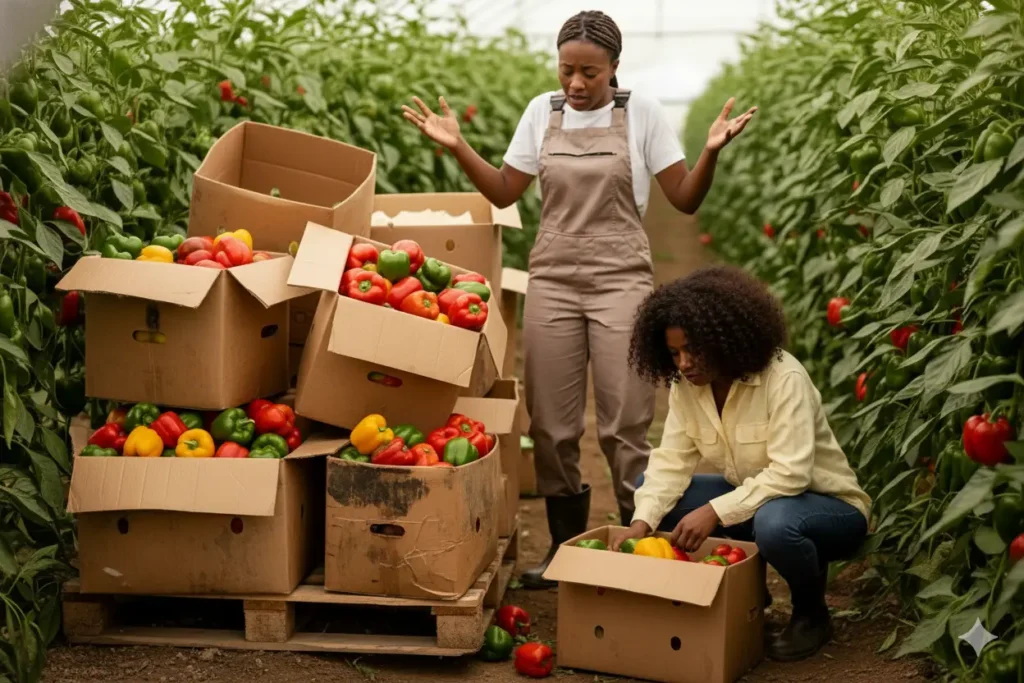
Poor packaging and loading mean you're relying on luck for uniform size and color. Your customers demand consistency; variance is what shows up.
Phase 1 — Quality Assurance at the Source
Locked in through field and nursery management.
Phase 2 — Post-Harvest & Supply Guarantee
Locked in the moment the pepper leaves the plant.
Built for wholesalers, supermarkets, exporters, food processors, and institutional buyers who can't afford quality variability.
Connect With Our Procurement TeamStop Losing Money on Eggs. Seriously.
The flock looks fine, but lay rate keeps slipping and FCR keeps climbing. You chase symptoms while feed toxins and chronic disease vectors quietly do the real damage — this service solidifies our Nutrition and Biosecurity pillars together.
The Unseen Profit Killers
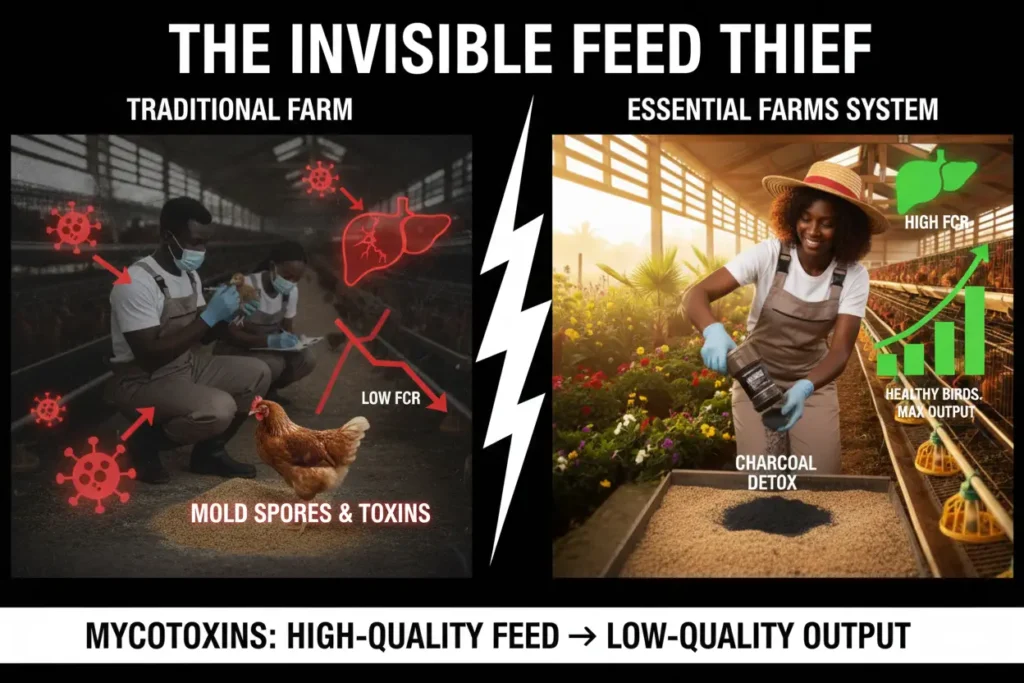
Invisible mold toxins in feed damage the liver, suppress immunity, and quietly wreck your FCR. You pay for good feed and get low-quality output.
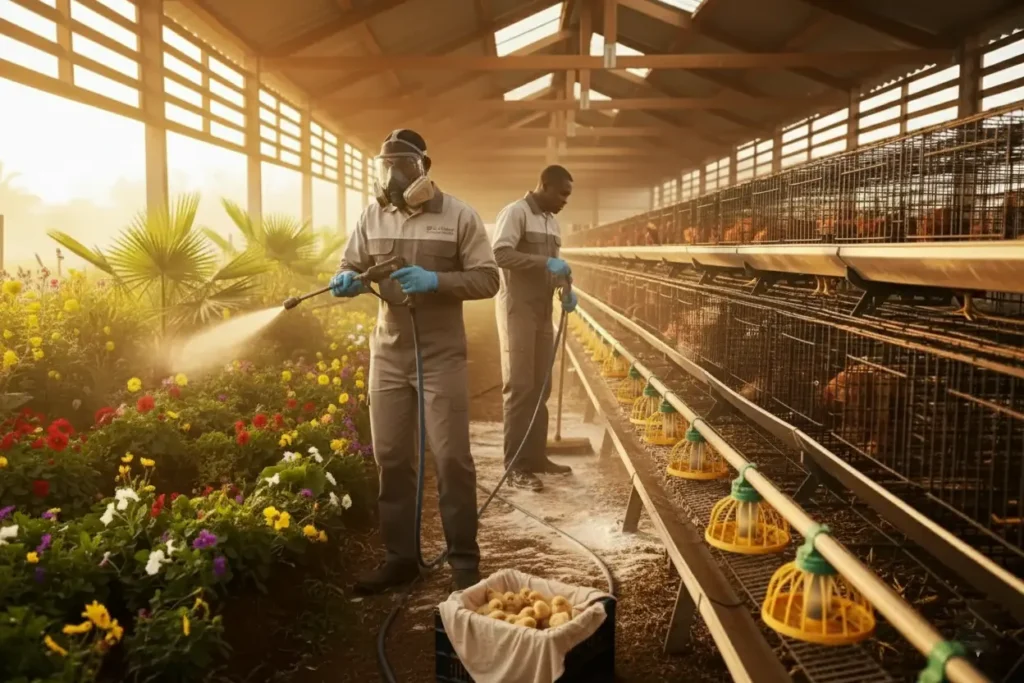
Transitioning flocks without a strict All-In, All-Out system guarantees disease vectors from the last flock pass straight to the new one.
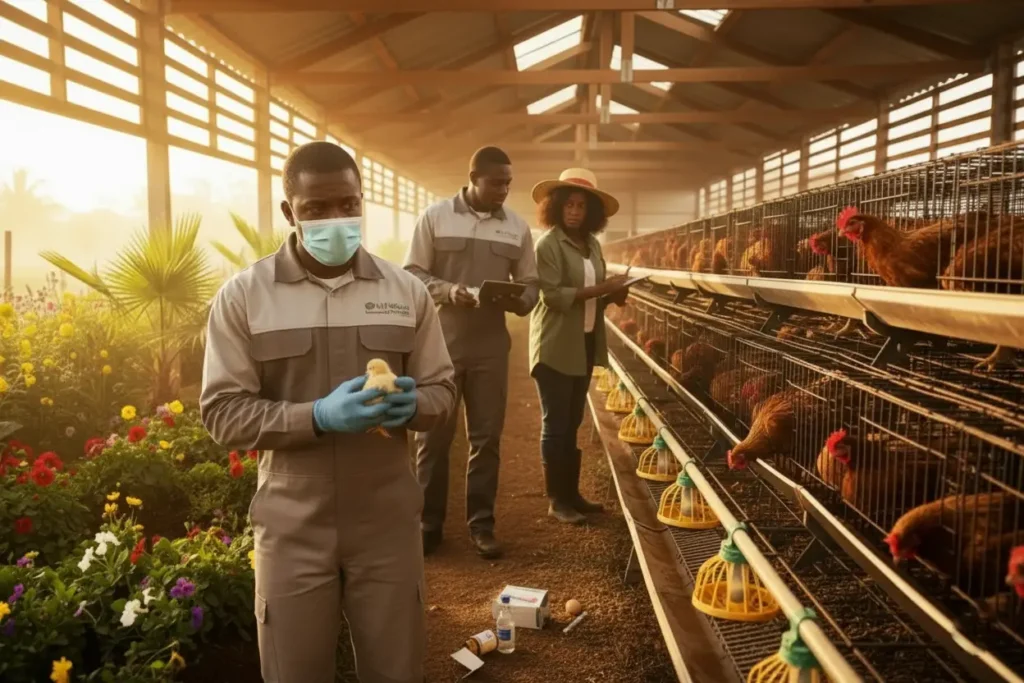
Skipping deworming or vaccinating without managing stress renders your health investment worthless — you assume protection your birds don't have.
Phase 1 — Internal Protection
Activated Charcoal Feed Detox
Phase 2 — External Defense
All-In, All-Out & Rigorous Biosecurity
Stop Waiting for Disease to Strike.
By the time you see the slump in laying, you've already lost time, money, and birds. The most profitable farms run on a preventative schedule — not a reactive one.
Inconsistent Health Management
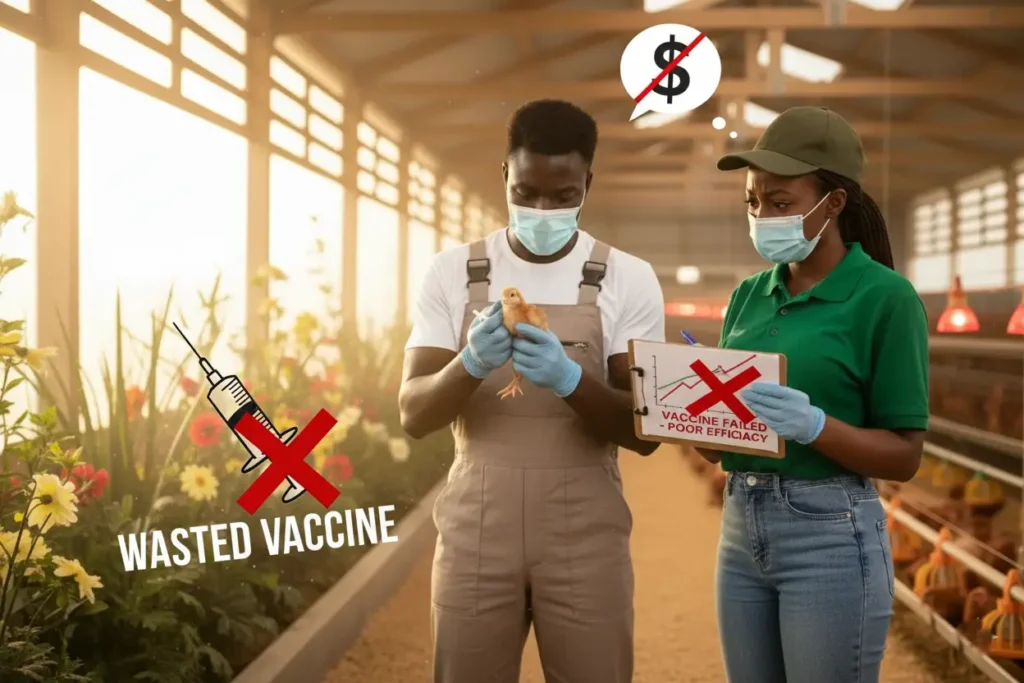
You give a costly vaccine but don't support the bird through the stress — the shot doesn't get absorbed properly, and it's essentially wasted.
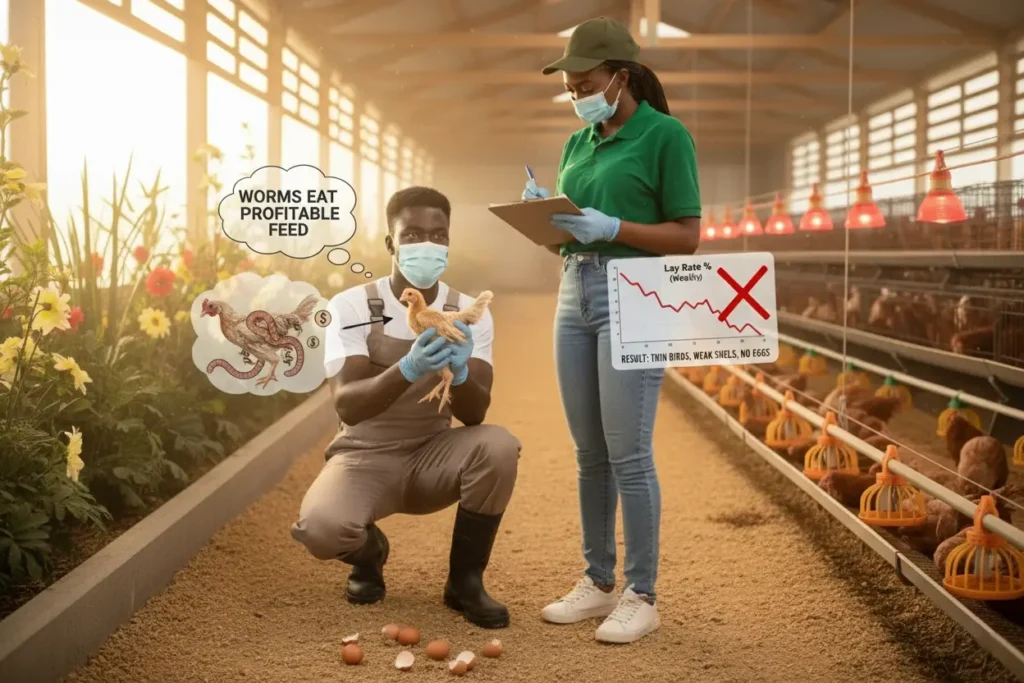
Skipping deworming lets internal parasites eat your expensive feed, leading to thin birds, weak shells, and a sudden drop in lay rate.
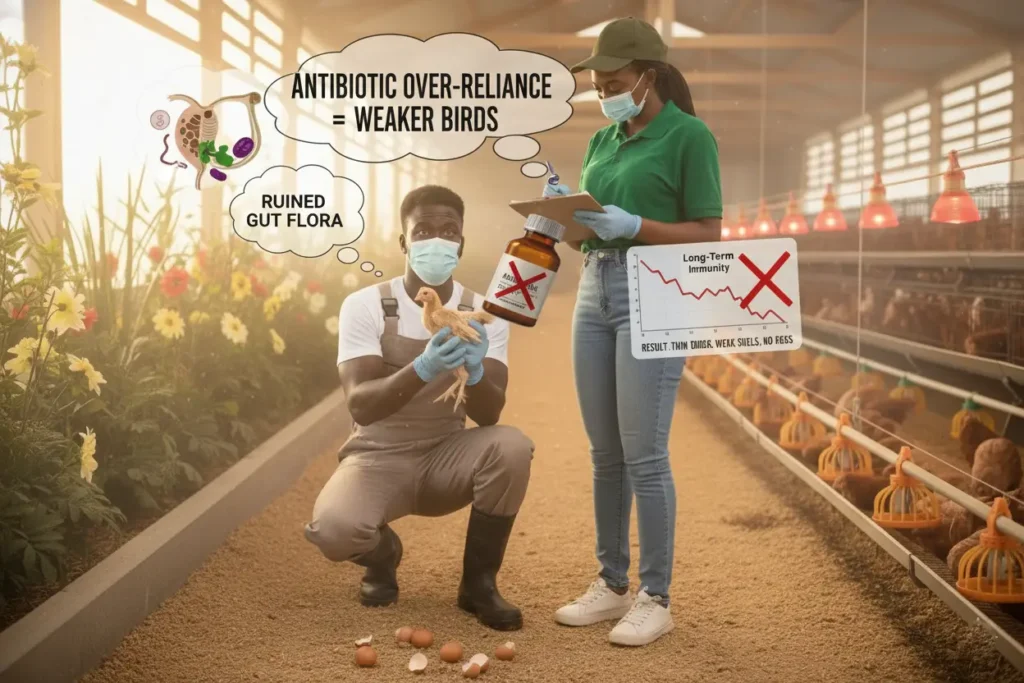
Over-relying on antibiotics for everything ruins the bird's natural gut flora and leaves birds weaker against real outbreaks.
Systematic Vaccination
Multivitamins and electrolytes 24 hours before and after every vaccination cushion birds against stress and boost immune absorption. Strict schedule adherence, close post-vaccination observation.
Routine Deworming Cycle
Deworming at Weeks 9 and 14, then every 6–8 weeks through the entire laying cycle. Controlled debeaking around Week 8–10 to prevent cannibalism and feed wastage.
Targeted Supplementation
Anti-coccidial management strictly on Days 9–12. Antibiotics used only when prescribed by a qualified vet for a specific diagnosis — never as routine prevention.
Protect Your Feed Bill and Your Future Flocks.
We treat debeaking and culling as economic decisions, not chores — a direct enforcement of our Feed and Biosecurity pillars. Stop wasting money and start cycling your profits cleanly.
Letting the Flock Run Itself
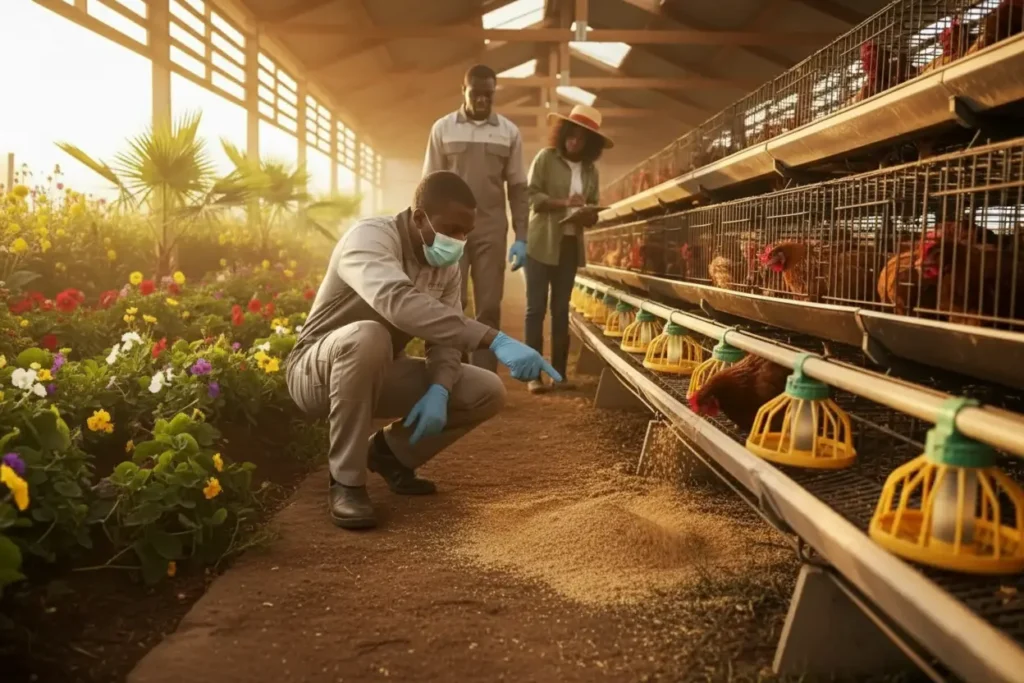
A fully-beaked bird is a feed spiller — raking expensive mash out of the trough and onto the floor. You're literally paying for feed to be wasted.
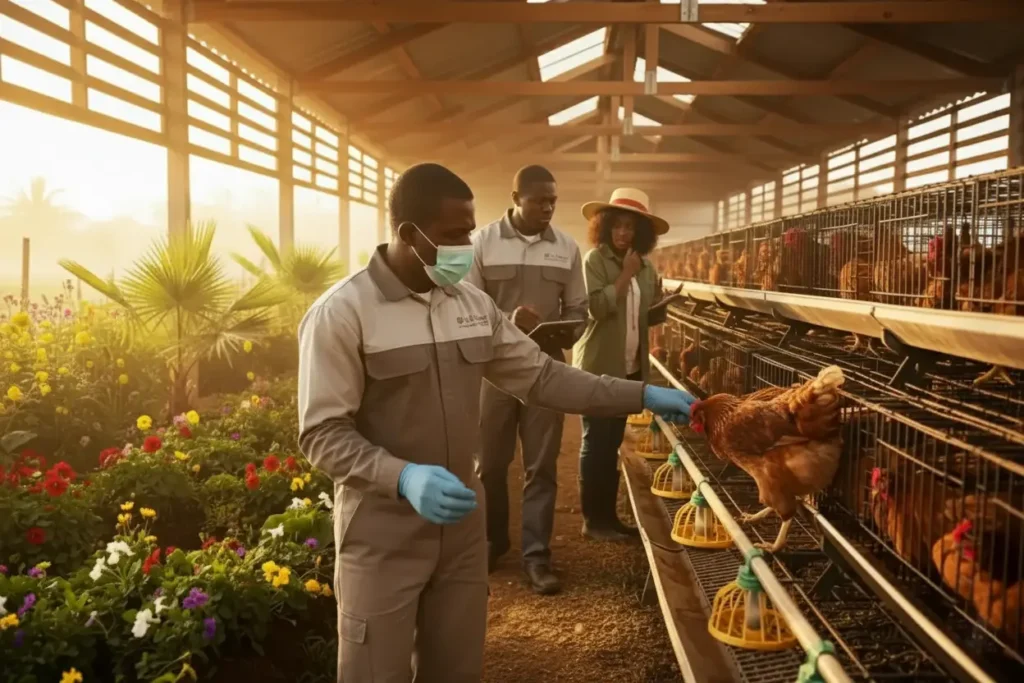
Once feather- or vent-pecking starts, it spreads fast — you lose birds that were perfectly fine a couple of hours earlier.
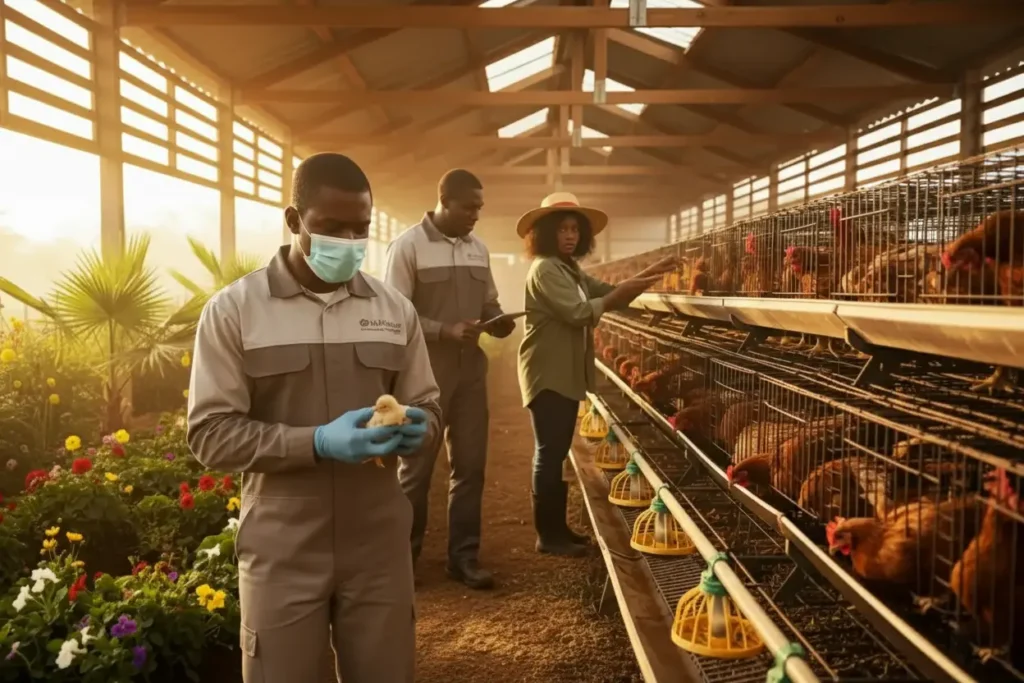
Holding onto old, unprofitable layers too long turns your house into a disease reservoir that crashes new Day-Old Chick investments.
Controlled Debeaking
Maximizing feed efficiency
Selling of Old Layers
The All-In, All-Out system
Don't Let Old Birds Poison Your Next Investment.
If you're keeping layers past their peak curve, you're not farming — you're running a retirement home for birds that are eating your profit. This is the brutal, necessary ending that secures the next cycle.
Holding On Too Long
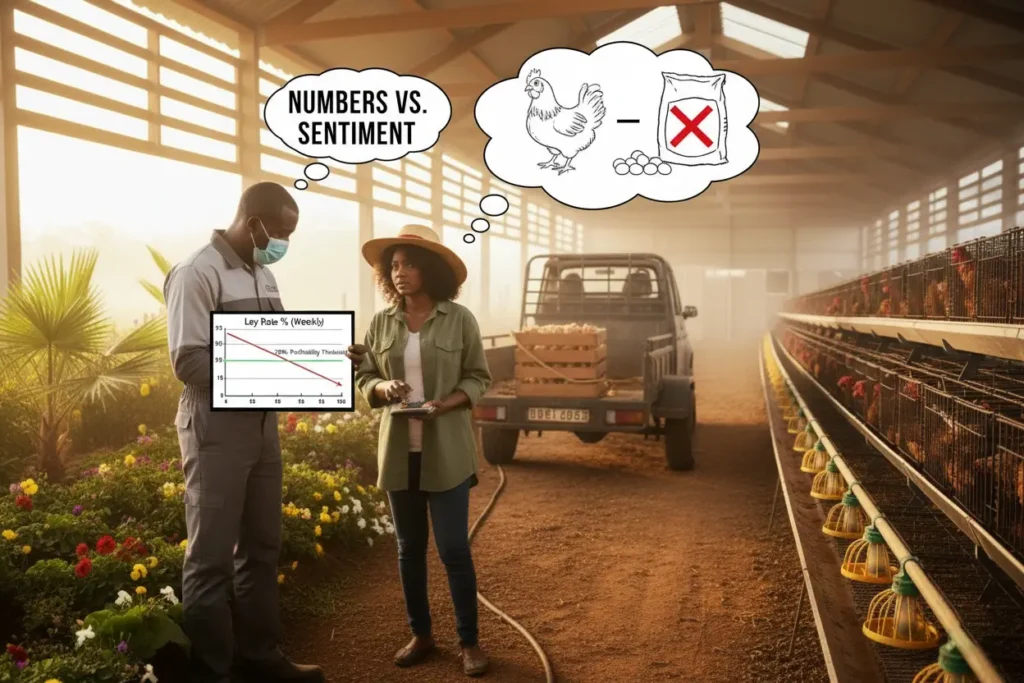
Layers peak around Week 30–32, then decline. Once lay rate drops below 70%, ask yourself: eggs, or sentiment? Sentiment doesn't pay for feed.
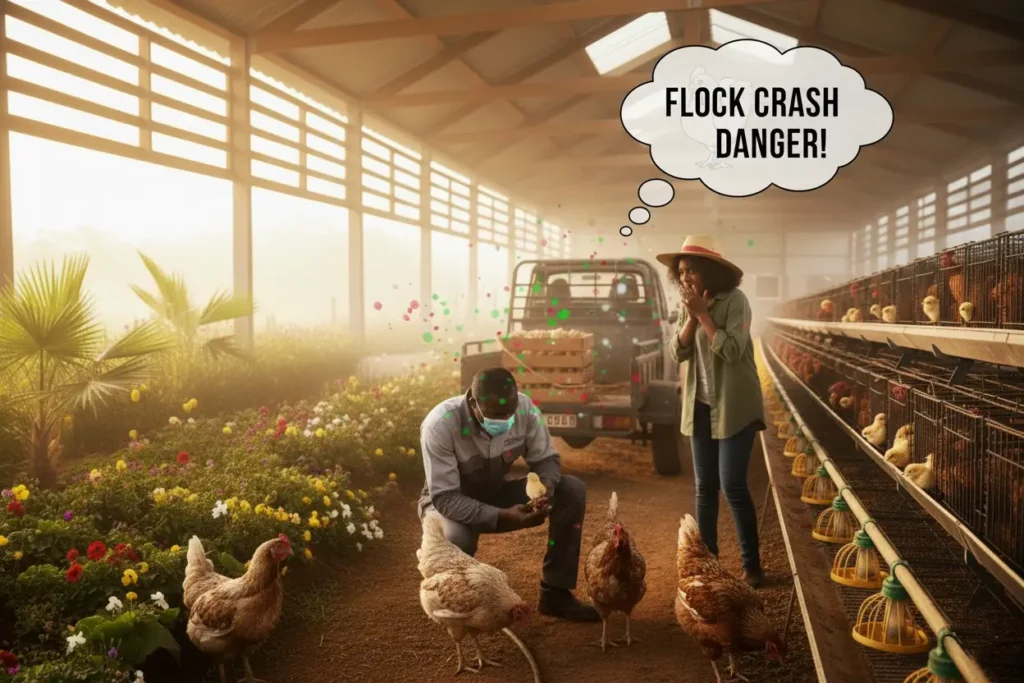
Old flocks inevitably carry a low-grade infection or parasite load. Bring in new DOCs to that same environment and it's a guaranteed flock crash.
Every day an old, low-producing bird sits in that cage is a day a new, high-producing pullet isn't — you're sacrificing future profit for inertia.
Economic Culling Assessment
We establish your farm's minimum viable lay rate from current feed and egg prices — typically triggering retirement between Weeks 75–80.
The Clean Break
Complete depopulation on Day 1, immediate litter removal, and terminal disinfection during the house rest period reset the biological environment.
Brokerage & Logistics
We connect you with verified buyers for retired layers and coordinate transport, so your team can focus on deep cleaning immediately.
Good Nutrition Is a Fundamental Right, Not a Privilege.
Every egg, every bell pepper, every nutritious product we produce carries the power to nourish life — especially for children, infants, mothers, and vulnerable communities who cannot afford these essential nutrients.
Through our Charity Program, a fixed percentage of every production cycle is reserved for free distribution to orphanages, low-income families, community clinics, and mothers in need — delivered through direct community partnerships and tracked for full transparency.
Who Benefits
- Children & Infants — protein, vitamins, and minerals for growth and immune development.
- Mothers & Pregnant Women — nutrient-dense produce supporting fetal development and breast milk.
- Orphanages & Vulnerable Households — consistent, high-quality meals for children who need them most.
- Communities with Limited Food Access — produce delivered directly to clinics and community centers.
How It Works
Farm expansion increases output → a designated share of each cycle is reserved for charity → community partners deliver it directly → impact is tracked and reported for full transparency.
What Our Clients Say
"Culling felt like failure to me. Essential Farm reframed it as a business decision — once we removed non-performing birds strategically, feed cost dropped and profit per bird increased."
"We were wasting vaccines without knowing it. Their electrolyte and multivitamin protocol around vaccination made a massive difference — mortality dropped almost immediately."
"I trust them because they produce consistently — strong eggs, healthy vegetables, reliable output. That's why I was confident donating to the Foundation program."
Tell Us Your Biggest Problem.
Falling lay rates, feed waste, disease outbreaks, or a supply chain you can't trust — we'll point you to the exact service and protocol that fixes it.